
Welcome, fellow internet user, to this highly specialized space for general surgery, abdominal wall reconstruction, and preventative health.
Deciding to undergo effective inguinal hernia surgery is the only definitive and effective way to restore the anatomical integrity of your inguinal region and prevent the dreaded risk of intestinal strangulation.
As a specialist surgeon and full professor of surgery at the University of Cuenca, my primary mission is to teach you that a hernia is not cured with rest, girdles or exercises; it responds to a structural physical defect that must be corrected through advanced medical engineering.
Before breaking down the physics of biocompatible mesh placement, comparing the open approach versus three-dimensional laparoscopy, or explaining how our cutting-edge protocol accelerates your recovery without chronic pain, I invite you to build certainties with scientific rigor.
Under the academic direction of Dr. Jorge Delgado, we analyze your physical restoration with the utmost clinical commitment.
Frequently Asked Questions
What is an inguinal hernia and why does it require mandatory surgery?
An inguinal hernia is the protrusion or exit of an organ or tissue (such as fat or intestine) through an opening of weakness in the muscles of the inguinal abdominal wall.
Since it is a purely mechanical defect, the hernial canal will never close on its own.
On the contrary, constant intra-abdominal pressure tends to enlarge the defect, requiring surgical repair to avoid life-threatening complications.
What is the difference between an incarcerated hernia and a strangulated hernia?
The key difference lies in the vitality of the tissue. An incarcerated hernia occurs when the contents become trapped in the hernial sac and cannot be manually returned to the abdomen, although it still maintains its blood supply.
If this entrapment persists, a strangulated hernia occurs: the hernial ring acts as a tourniquet that cuts off blood flow, causing ischemia (lack of oxygen), intestinal necrosis and severe peritonitis within a few hours, which constitutes an extreme medical emergency.
How does mesh placement work in modern hernioplasty?
The cutting-edge technique uses polypropylene mesh or high-tech biocompatible materials. Instead of suturing and tightening weakened muscles—which causes severe postoperative pain and a high recurrence rate (the hernia returning)—the mesh is placed like a tension-free "patch."
This acts as a scaffold on which your body deposits collagen, creating an extremely strong and flexible healing wall.
How does preventative health influence the outcome before and after surgery?
Preventive healthcare optimizes internal pressures. Before surgery, it is vital to eliminate factors that chronically raise intra-abdominal pressure, such as smoking (due to persistent coughing), being overweight, or severe constipation.
In the postoperative period, these measures prevent the repair from failing: maintaining a smooth digestion and avoiding lifting heavy loads during the first 4 weeks ensure that the mesh integrates perfectly into the tissues without suffering mechanical displacement.
This article will cover inguinal hernia surgery, the different types of surgery, the preparation process, as well as possible complications and the recovery period.
If you're considering hernia surgery or have been recommended for it, it's important to understand the key aspects of the procedure —written by people, for people . Here's everything you need to know about inguinal hernia surgery.
Now is the ideal time to provide your brain with the best source of vital energy. This is achieved by inhaling deeply, holding your breath for four seconds, and exhaling slowly. Repeat this exercise four times. This will improve your cognitive concentration and help you retain information for personal development.
This indicates a proactive approach to noticing any lumps or discomfort that arises when lifting objects, coughing, or climbing stairs, such as a feeling of tension or burning in the groin. This is a reason to schedule a visit to your doctor for a checkup. Okay, let's learn more about this new development!
Effective inguinal hernia surgery
An inguinal hernia operation is a common type of surgery that treats hernias in the lower abdomen, specifically in the inguinal canal.
To put this into perspective, statistics show that approximately 700.000 of these surgeries are performed each year in the United States alone, making them one of the most common surgical procedures.
Inguinal hernias occur when tissue or an organ (such as the omentum or small intestine) pushes through a weak spot in the abdominal wall and can be caused by factors such as age, lifting heavy objects, chronic coughing, or straining during bowel movements.
Common symptoms include a visible bulge in the area around the pubis or groin, discomfort or pain when bending over or standing up, and burning or pain at the site of the hernia.
Although inguinal hernia surgeries are generally safe and low-risk, potential complications such as bleeding, infection, and blood clots still exist. Therefore, it's important to talk to your doctor if you experience any symptoms of an inguinal hernia to ensure you receive timely treatment.
⚠️ IMPORTANT NOTICE:
Please note that this post is for informational purposes only and should not be considered medical advice. It is always important to consult a healthcare professional in your area for a proper diagnosis and timely treatment plan.
Understanding inguinal hernia
Before delving into the details of inguinal hernia surgery, it is important to understand what an inguinal hernia is.
An inguinal hernia occurs when soft tissue (usually a portion of the membrane lining the abdominal cavity or a segment of the intestine) protrudes through a weak spot in the abdominal muscles.
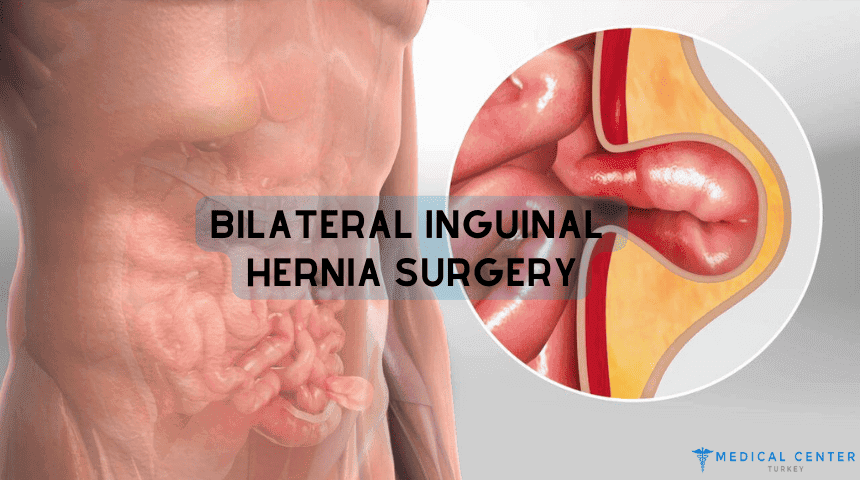
This can cause a visible bulge on the side of the pubic bone, which is often accompanied by significant discomfort or pain.
Inguinal hernias are more common in men than in women and can sometimes be associated with certain activities that increase abdominal pressure, such as lifting heavy objects, straining during bowel movements, or even during pregnancy and childbirth.
Some people with inguinal hernias may be advised by their healthcare provider to consider surgery to reduce the risk of complications.
When is surgery necessary?
Inguinal hernia repair is usually recommended when the hernia becomes painful or causes other bothersome symptoms. The decision to undergo surgery is typically based on the size of the hernia, the level of pain and discomfort experienced, and the potential risk of complications.
In some cases, the healthcare provider may adopt a "watchful waiting" approach, especially if the hernia is small and not causing discomfort. It's important to remember that hernias always grow steadily.
However, in most cases, surgery is considered the most effective way to treat an inguinal hernia and prevent the risk of obstruction or strangulation, which can be serious and require emergency intervention.
It is important for people with an inguinal hernia to talk thoroughly with their healthcare provider to determine the most appropriate course of action, taking into account their overall health and the potential benefits and risks of the surgical procedure.
Types of surgical intervention
When repairing an inguinal hernia, there are several approaches a surgeon can consider. The two main techniques for inguinal hernia repair are open surgery and laparoscopy.
Each approach has its own advantages and considerations, and the most suitable option for each person will depend on various factors, such as the size and location of the hernia, as well as their medical history and overall health.
- The open repair, also known as herniorrhaphy (closure of the defect with sutures) or hernioplasty (Placement of a surgical mesh) involves making an incision in the groin and manually pushing the protruding tissue back into the abdomen. This is often followed by the placement of a synthetic mesh to reinforce the abdominal wall.
- On the other hand, laparoscopic repair It is a minimally invasive procedure that involves making small incisions through which a laparoscope and other specialized surgical instruments are inserted, allowing the surgeon to visualize the affected area and perform the necessary repairs (herniorrhaphy or hernioplasty) with greater precision.
Open surgery in detail
Open inguinal hernia repair is usually performed under local or general anesthesia. During the procedure, the surgeon makes an incision in the lower abdomen, pushes the hernia back into place, and reinforces the abdominal wall with a synthetic mesh before closing the incision with sutures.
Although open repair may be associated with a slightly longer recovery period and a higher risk of postoperative pain, it is a proven and effective method for repairing inguinal hernias, with long-term success in preventing hernia recurrence.
Laparoscopic repair in detail
Laparoscopic inguinal hernia repair, also known as minimally invasive surgery, is a technically advanced method that allows for a faster recovery and less postoperative pain.
This method involves inserting a thin, lighted endoscope and specialized surgical instruments through small incisions in the abdomen. This allows the surgeon to view magnified internal structures on a monitor and delicately repair the hernia using a synthetic mesh.

Although laparoscopic repair may not be suitable for all types of inguinal hernia, it is often preferred because of its ability to reduce the size and number of incisions, which shortens recovery time and potentially reduces visible scarring.
Preparation for surgery
Before undergoing inguinal hernia surgery, the patient usually goes through a thorough pre-operative assessment to evaluate their overall health and ensure they are well prepared for the procedure.
This may involve various diagnostic tests, such as blood tests and imaging studies, as well as a review of the patient's medical history and current medications.
In the period prior to surgery, the healthcare team will provide the patient with specific guidelines, such as the pre-anesthetic assessment, which may include instructions on fasting before surgery, necessary modifications to their medication regimen, as well as instructions on the steps to follow to prepare their home and facilitate a more comfortable and convenient post-operative recovery.
It is crucial that the patient diligently follow these instructions to minimize the risk of complications and promote the smoothest possible healing of post-surgical tissues.
The surgical procedure
On the day of surgery, the patient will be admitted to the medical center and the surgical team will perform a final review of the procedure. The type of anesthesia to be used (general or local with sedation) will be determined and explained to the patient.
During the surgery, the medical team will follow strict protocols to maintain a sterile environment and minimize the risk of infection.
- In the case of an open repair, the surgeon will perform an incision in the groin (8 to 10 cm in length), will gently push the hernia into place and reinforce the abdominal wall with a synthetic mesh before closing the incision.
- In the case of laparoscopic repair, the following will be performed small incisions (0.5 cm to 1 cm) to insert the laparoscope and other instruments, which will allow the surgeon to repair the hernia precisely and with the help of a video monitor.
Regardless of the approach, the surgical team will meticulously ensure the procedure is successful, as well as the patient's safety and well-being.
To understand the evolution of the medical technique that restores the strength of your tissues, it is helpful to observe the classic methodological steps that guide the surgeon during the procedure:
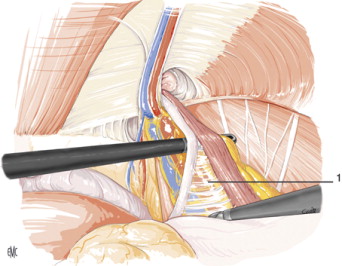
Evolution of surgical times in inguinal herniorrhaphy.
As you can see in the graphic representation, the procedure requires millimeter exposure of the inguinal canal.
The modern goal is to free the hernial sac from the local nerves and place the synthetic reinforcement in the exact plane to ensure a tight, stress-free fixation.
Recovery and follow-up care
After inguinal hernia surgery, the patient will be observed in a recovery area and, once fully alert and stable, will be discharged with specific instructions for postoperative care.
The initial recovery period may involve some discomfort, and the healthcare team will guide the patient in pain management, wound care, and the gradual resumption of normal activities.
It is important that the patient closely follow these instructions to promote a smooth recovery process, for example, walking on flat ground, avoiding climbing stairs and not driving a vehicle.
In the days and weeks following the procedure, the patient should be alert to any possible signs of complications , such as excessive swelling, persistent pain, or signs of infection at the surgical site, and promptly notify their surgeon or healthcare staff.
With careful postoperative care and a gradual return to normal activities, most patients can expect a satisfactory recovery, with a significant reduction or elimination of inguinal hernia-related symptoms.

Possible complications and when to seek medical help
Although inguinal hernia surgery is generally safe and effective, it is important for patients to be aware of the risks and possible complications.
These may include postoperative pain, wound infection, or the formation of a seroma or hematoma at the surgical site.
In some cases, people may experience a recurrence of the hernia or damage to nearby structures. It is essential that patients are well-informed about these potential problems and know when to seek medical help.
Any unusual or concerning symptoms should be reported to a healthcare provider to promptly address and resolve any potential complications, ensuring the best possible outcome for the patient's long-term recovery and well-being.
With advances in surgical techniques and anesthetic procedures, inguinal hernia surgery has become a highly successful and frequently performed intervention, addressing the symptoms and potential risks associated with inguinal hernias.
Whether it is an open repair or a laparoscopic approach, the decision to undergo inguinal hernia surgery is made after a careful evaluation of the patient's medical history and the specific characteristics of the hernia.
By understanding the surgical intervention process and actively participating in pre-operative preparations and post-operative care, patients can take proactive steps to treat their inguinal hernia and work towards a successful recovery, without the limitations and discomfort that this common condition entails.
Value analysis
Biomechanical and Tissue Factor Management:
Dr. Delgado provides an indispensable differentiating value by explaining abdominal wall repair as a balance of physical forces.
Translating the repair of a hernia into the concept of Laplace's Law (according to which the tension of the abdominal wall is proportional to the radius of the defect) allows the reader to understand why delaying the operation and allowing the hole to grow exponentially increases the weakness of the muscles.
Surgery ceases to be perceived as an invasive punishment and comes to be understood as a high-precision physical restoration measure.
Academic and Professorial Vision:
The difference lies in the pedagogy of safe anatomy . As a university professor of surgery at the University of Cuenca, I teach that a mesh is only as good as the surgeon's knowledge of the Fruchaud's myopectineal orifice (the true epicenter of groin hernias).
Providing the reader with this level of scientific detail allows them to understand the risk of developing chronic groin pain if nerve pathways (such as the ilioinguinal and iliohypogastric nerves) are not carefully protected, empowering them to choose practitioners with the highest surgical skill.
Conclusion
In short, inguinal hernia surgery involves repairing a bulge in the groin and aims to relieve pain and prevent serious complications. There are different types of surgery, each with its own benefits and recovery process.
If you experience symptoms of an inguinal hernia, it is important to consult a doctor at a hospital or health clinic, either through the public or private healthcare system, depending on your geographical location, to determine if surgery is necessary.
With proper preparation and knowledge, you can be sure you are making the best decision for your health.
It's time to share preventative information on social media and, together, help more people understand the complications of a hernia. Thank you for your comments and suggestions for the blog. Until next time!
Dr. Jorge Delgado, Surgeon. Effective Inguinal Hernia Surgery.
📌 Recommended readings:
✅ Inguinal hernia is one of the main physical causes
✅ The straining caused by slow transit sabotages the healing of your mesh
✅ Preventive approach to pressures on the female abdominal wall