

Hello dear internet user and welcome to the digestive health blog. We begin with a pertinent question: Does the appendix stay inside the body? What happens? The vermiform appendix is a small and mysterious organ that has long puzzled scientists and medical professionals.
What exactly is its function? Why do some people experience excruciating pain from appendicitis? In this article, we'll delve into the world of the appendix and explore its location and function. "written by people, for people" and the life-threatening condition known as acute appendicitis.
I invite you to drink a cup of dark chocolate free of colorings, sweeteners preferably from organic crops, diluted in water and the perfect combination of 100% natural neurostimulants is added, whose effects are enhanced with red cranberries for high cognitive concentration and information retention for personal development.
This positive action determines a proactive attitude to deal with the self-esteem and, even worse, self-medicationThis allows for a delay in medical assistance at hospitals or health clinics through the local public or private health system, thus reducing serious digestive complications.
Join us as we unravel the secrets of this enigmatic organ and discover why it plays a crucial role in our digestive system. Let's delve into the mysteries of the appendix.
Does the appendix stay inside the body?
The appendix, a small organ that hangs from the large intestine, has long been a subject of debate.
Recent advances in medical research suggest that it could play an important role in digestion, communication between the large and small intestines, or even as a reservoir of healthy bacteria to repopulate them during any digestive disorder.
However, cases of severe inflammation or infection caused by the appendix are rare, and with the abundance of surgeries nowadays, those affected by appendicitis rarely have anything more than mild symptoms.
The figures show that around 5-7% of people develop this condition each year, usually among the 10 and 30 years oldIt is evident, then, that although its exact function remains mysterious, it is often better to remove it than to leave it in place.
Location and function
Located in the lower right region of the abdomen, the organ in question is an extension of the cecum, the end of the small intestine and the beginning of the large intestine. Its cylindrical shape allows for the storage of beneficial bacteria, which help in decomposition of food particles.
Connected to the cecum via a small, tube-like structure 8 to 10 cm long, it allows for the passage and exchange of waste materials. This connection to the large intestine ensures that the organ is strategically positioned to contribute to the digestive process.
Unfortunately, its position, shape, and 6 mm size of the appendicular lumen also make it susceptible to processes such as inflammation and infection of the vermiform appendicular viscera.
Appendicitis It is a condition that arises when the organ becomes inflamed, often causing pain in the lower right abdomen, although it can start around the navel. If left untreated, it can worsen and even rupture, increasing the risk of the dreaded peritonitis, a serious infection of the lining of the abdominal cavity.
Recognize the warning signs in your body Recognizing appendicitis and seeking medical attention immediately is essential to avoid major complications and ensure proper treatment.
The position and purpose of this organ make it a key element of the digestive system, which underscores the importance of understanding its function and the potential risks associated with its inflammation.
Although small, the appendix is an important component of the digestive system. It houses healthy bacteria that aid in digestion and nutrient absorptionthus promoting a healthy intestinal environment.
Although it is not necessary for survival, contributes to digestive health In general, being aware of the functions and risks of the appendix is essential to maintaining your well-being.
symptoms of appendicitis
A key sign of appendicitis is abdominal pain, which begins near the navel and gradually moves to the lower right side of the abdomen. This discomfort can range from mild ache to sharp and intense pain, and may also be accompanied by increased tenderness when pressure is applied.
Also can appear Nausea, vomiting, and loss of appetite are common symptoms. It's essential to keep in mind that symptoms can vary from person to person, so medical attention should be sought as soon as possible if any of these occur.
La Fever can also be indicative of appendicitis in mensince it is a consequence of the inflammation caused by the infection. Therefore, if abdominal pain is accompanied by a high body temperature, it is important to consider the possibility of appendicitis and seek medical evaluation.
Abnormal bowel movements, such as diarrhea at first and constipation as the hours pass, can also be a sign of the condition because inflammation alters the peristalsis of the digestive system.
Coughing or sneezing can also induce localized pain Pain in the lower right abdomen is an additional indication of appendicitis. It is important to note any changes in the intensity or location of the pain, as well as its persistence, as these can help diagnose the condition.
In some cases, referred pain may be experienced in other areas of the body, such as the upper abdomen, pelvis, or flank, in the case of appendicitis with the vermiform appendicular tip located retrocecally, for example.

If you experience any combination of these signs, it is essential that you see a doctor through the public or private healthcare system as soon as possible for proper evaluation and treatment. To ensure timely diagnosis and treatment, it is important to be aware of the various signs and symptoms of appendicitis.
Incidence of appendicitis
The recurrence of appendicitis refers to how frequently this condition occurs in the population. frequent problemsince around the 7% of the people who have to deal with an inflammation of the appendix.
Thus, out of every one hundred individuals, about seven would suffer from this disease at some point in their lives. Although the underlying cause of appendicitis remains unclear, age and sex may influence the likelihood of developing it.
Knowing the incidence rate of appendicitis can help medical experts diagnose and treat those experiencing abdominal pain, a typical symptom of this disorder.
Detecting appendicitis can be complicated, as its symptoms can mimic those of other diseases.
Even so, when assessing the recurrence of appendiceal irritation, Medical professionals can get a clearer idea of the likelihood of this condition in patients with abdominal discomfort. It should be noted that the recurrence of appendicitis can vary among different demographic and age groups.
In addition, certain factors, such as a family history of appendicitis or previous episodes of irritation, can increase a person's risk.
Being aware of the recurrence of appendicitis, the health specialists They can offer timely and accurate diagnoses, leading to rapid treatment and can prevent complications such as peritonitis due to delayed care and appendiceal rupture with the respective contamination of the abdominal cavity.
Although the exact cause of appendicitis is not yet fully understood, studies have shown that there may be a genetic component to this condition. Recurrence of appendicitis is more common in people with a family history of the disorder, suggesting a possible hereditary link.
Likewise, certain aspects of lifestyle, such as an unhealthy diet and low or no levels of physical activity, (please no romanticizing sedentary lifestyles), they can also contribute to the onset of appendicitis.
Research has shown that a diet low in dietary fiber A diet high in processed foods may increase the risk of developing appendicitis. Understanding the factors that contribute to the onset of appendicitis can help people make informed decisions about their well-being. reducir potentially their chances of suffering from this problem.
Connection with the blind
The small and often ignored vermiform appendicular organ located at the junction between the small and large intestine, the cecum specifically, serves as an important receiving chamber for waste material.
Attached to the cecum is a cylindrical structure known as the appendix, which It serves as a reservoir for healthy bacteria that aid in digestion and play a role in the immune system.
This connection between the appendix and the cecum allows for the easy transfer of these beneficial bacteria, ensuring their presence throughout the digestive system for the benefit of the overall immune system.
Anatomy indicates that the appendix is located on the right side of the abdomen and is connected to the cecum via a narrow tube known as the appendiceal orifice. However, this connection also makes the appendix vulnerable to any obstruction or inflammation of the cecum, which can lead to a condition called appendicitis.
The symptoms of this condition include a Intense pain in the lower right abdomen that starts around the navel and may migrate to the lower right. If left untreated, appendicitis can progress and cause serious complications, such as rupture and subsequent peritonitis.
Given the serious risks associated with appendicitis, it is important to understand the importance of timely diagnosis and treatment. Antibiotics are typically administered to control the infection, followed by surgical removal of the appendix, known as appendectomy. appendectomy.
Since the appendix is located close to the cecum, which facilitates the spread of infection, prompt medical attention is essential to avoid further complications.
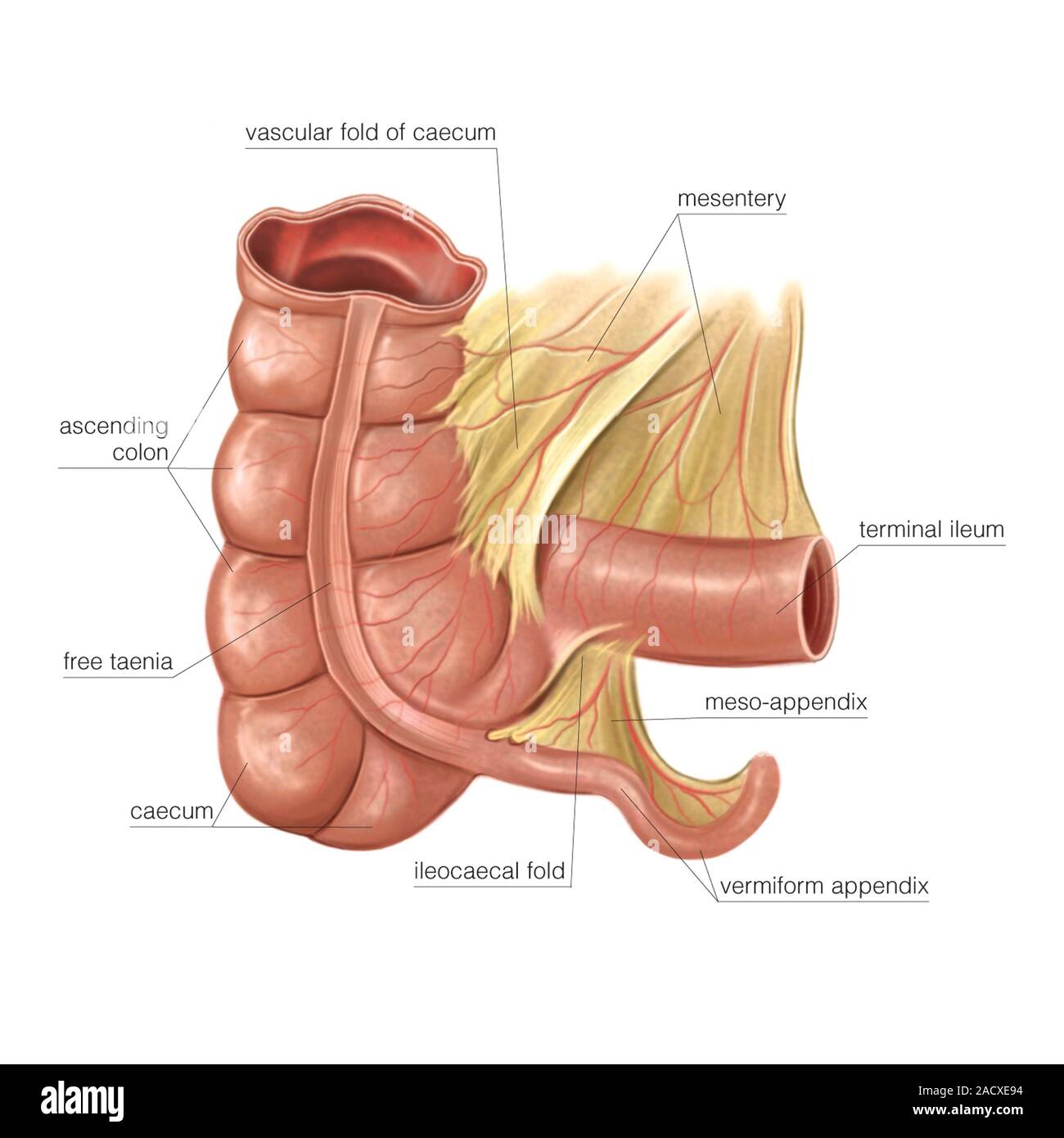
The connection between the appendix and the cecum is essential for the functioning of the digestive system and the immune system, and must be respected. Knowing the Anatomy of the appendix and its proximity to the cecum It can help identify potential risks of appendicitis and prompt you to seek immediate medical attention to prevent any further complications.
Complications of appendicitis
Timely diagnosis and intervention are essential for prevent The potential complications of appendicitis. These can include the formation of an abscess, which occurs when the appendix becomes clogged with fluid. pus accumulates in the inflamed organcausing a localized infection and unbearable pain.
Furthermore, a ruptured appendix can lead to the release of bacteria and other infectious agents into the abdominal cavity, triggering a peritonitis, a severe inflammation of the abdominal lining.
In addition, infection from a ruptured appendix can spread to nearby organs, such as the bladder in men or the uterus in women, which can lead to urinary tract infections or pelvic inflammatory disease.
In rare cases, the infection can reach the bloodstream, causing SepsisAppendicitis is a serious and potentially life-threatening condition. Therefore, early detection and treatment of appendicitis are essential for prevent These complications.
The standard treatment for appendicitis is appendectomy, which involves the surgical removal of the inflamed organ. It can be performed using conventional open surgery or minimally invasive laparoscopic techniques, the latter being preferable as they result in less scarring and a faster recovery time.
In some advanced cases of the disease, the surgeon may also drain the abscesses percutaneously before removing the appendix. Antibiotics are also prescribed to control the infection. avoid subsequent complications.
Therefore, appendicitis can lead to various complications, some of which can be fatal. It is therefore imperative to recognize the symptoms of the condition, such as pain and tenderness in the lower right abdomen, and to see a doctor as soon as possible. avoid serious complications and ensure a satisfactory recovery.
Difference with the thyroid gland
Two unique organs in the human body, the appendix and the thyroid gland, have distinct functions and purposes. Let's understand and demonstrate their marked differences in postoperative treatment.
Although this located in the abdomen and connected to the large intestineThe appendix can be surgically removed without the need for external assistance; a process known as appendectomy, which is the only cure if a person is diagnosed with appendicitis.
In comparison, the The thyroid gland, located in the neck, produces hormones to regulate metabolism; removing it would require hormone replacement therapy to maintain bodily functions..
Therefore, it is essential to recognize the variation between these organs and their particular characteristics to ensure accurate diagnosis and appropriate treatment.
Furthermore, the potential complications of appendicitis and thyroid gland problems vary. inflammation of the appendix, or appendicitisIt can cause serious problems such as appendiceal rupture and, if not treated quickly, leads to peritonitis.
On the other hand, thyroid disorders, such as hypothyroidism or hyperthyroidism, They can affect metabolism, energy levels, and mood. Therefore, the diagnostic approaches for each organ also differ: appendicitis is usually diagnosed through physical examination, blood tests, and imaging studies, while other conditions can affect metabolism, energy levels, and mood. Thyroid disorders may involve evaluations of hormone levels and ultrasound procedures with biopsy.
Therefore, it is necessary to thoroughly understand the distinction between the appendix and the thyroid gland to facilitate a satisfactory diagnosis of appendicitis due to its wide variety of digestive symptoms.
Thus, the appendix and the thyroid gland have distinct roles and functions within the human body. While the appendix can be removed without external assistance, the thyroid gland is responsible for hormone production.
The potential complications and diagnostic approaches for these two organs also differ significantly. Therefore, recognize the difference The relationship between the appendix and the thyroid gland is essential to ensure proper diagnosis and treatment of any related condition.
Appendicitis Treatment
Treatment for appendicitis usually requires the surgical removal of the inflamed organ, also known as appendectomy.
This operation is considered the only effective cure for the disease and is usually performed as soon as possible to avoid potential complications. Before the procedure, antibiotics may be administered to control any infection that may have developed.
La appendectomy It can be performed using conventional open surgery or a minimally invasive laparoscopic approach.
During the procedure, the appendix is removed to prevent subsequent problems, and the patient is closely monitored for any signs of infection or other postoperative complications.
After an appendectomy, patients may be prescribed pain medication to relieve any discomfort or pain in the incision area. It is essential that patients take it easy and follow their doctor's postoperative instructions.
The recovery period may vary, but most patients can resume their usual activities within one or two weeks. This is achieved by being persistent in continuous walking at home, accompanied by deep breaths to improve respiratory function.

El risk of complicationsThe risk of infection or abscess formation is relatively low with proper treatment.
However, it is vital that people with suspected appendicitis see their local doctor quickly through the public or private healthcare systemsince delaying treatment can increase the risk of serious complications, including more intense abdominal pain, with marked general decline.
In some cases, if the appendix has already ruptured before surgery, additional treatment may be necessary.
This may include the drainage of abscesses that may have formed or a longer course of antibiotics to reduce the infection. Rarely, if the infection has spread extensively or if complications such as peritonitis develop, a more extensive surgical approach may be necessary.

It is important that people who have undergone an appendectomy consult their doctor for any necessary monitoring or further treatment. Therefore, timely diagnosis and treatment of appendicitis are crucial. are vital to ensure a satisfactory recovery and reduce the risk of complications.
Conclusion
In short, the appendix is a small but vital organ of the digestive system. Despite its seemingly insignificant role, it plays a crucial role in hosting healthy bacteria and in maintaining intestinal health.
However, when it becomes inflamed, it can lead to a potentially serious condition. severe condition known as acute appendicitisRecognizing the symptoms and seeking prompt medical attention is crucial to preventing complications such as peritonitis or rupture. Appendicitis is a common illness that affects a significant portion of the population.
Fortunately, surgical removal of the appendix, known as appendectomy, is a very effective treatment.
Understanding the function, location, and potential complications of the appendix will allow us to better appreciate the importance of this organ in our overall well-being and in the treatment of digestive disorders.
You've reached this part of the reading; it's time to share preventive health information about the vermiform appendix on social media so that together family and friends can benefit and avoid serious complications.
Thank you for leaving your comments and suggestions on the blog. See you in the next post!
Dr. Jorge Delgado, Surgeon. Does the appendix stay inside the body?