

Welcome to this highly specialized space for general surgery, abdominal wall reconstruction, surface anatomy, and preventive health.
Understanding the difference between a direct and an indirect hernia requires analyzing the anatomy of the inguinal canal and the relationship between the hernial sacs and the inferior epigastric vessels.
As a specialist surgeon and full professor at the University of Cuenca, our priority is to provide you with a medical lesson of the highest precision, teaching you that, while an indirect hernia is a congenital defect or a defect of the deep ring that descends into the scrotum, a direct hernia is an acquired weakness of the inguinal floor in Hesselbach's triangle.
Before deconstructing the Nyhus and Gilbert Surgical Classification, analyzing why bimanual examination differentiates protrusion on touch, or explaining how our cutting-edge protocol addresses reconstruction with polypropylene mesh (Lichtenstein vs. TAPP/TEP), I invite you to seek certainty in the scientific evidence.
Under the academic direction of Dr. Jorge Delgado, we evaluate your health with the utmost clinical rigor.
Inguinal hernias are a common condition in which tissue or an organ protrudes through the abdominal wall.
Frequently asked questions about hernias
What is the main anatomical difference between a direct and an indirect inguinal hernia?
The difference lies in their origin with respect to the inferior epigastric vessels:
Indirect Inguinal Hernia: the sac emerges lateral to the epigastric vessels through the deep inguinal ring due to weakness of the transversalis fascia, accompanying the elements of the spermatic cord (frequently descending into the scrotum).
Direct Inguinal Hernia: the sac protrudes medial to the epigastric vessels through the floor of the inguinal canal (Hesselbach's triangle), due to weakness of the lower wall or floor of the inguinal canal.
What is Hesselbach's Triangle and what role does it play in direct hernia?
It is an area of anatomical weakness in the floor of the inguinal canal delimited by:
Lateral border: inferior epigastric vessels.
Medial border: lateral border of the rectus abdominis muscle.
Inferior border: inguinal ligament (of Poupart).
The direct hernia passes frontally through this triangle without entering the deep ring.
How do they differ during a physical examination in the doctor's office?
Using the Deep Inguinal Ring Occlusion Test (Landivar Sign):
The doctor occludes the deep ring (located 1.5 cm above the midpoint of the inguinal ligament) with one finger and asks the patient to cough.
If the hernia is contained at the fingertip, it is indirect; if it protrudes anyway, pushing against the lateral edge of the finger, it is direct.
Does the surgical treatment differ between a direct and an indirect hernia?
In modern open surgery (Lichtenstein technique) and in laparoscopic surgery (TAPP/TEP), a large synthetic polypropylene mesh is used that completely covers the entire Fruchaud's Myopectineal Orifice.
Therefore, the mesh reinforces both the direct and indirect space, preventing recurrences in both areas.
This article will focus on the two types of inguinal hernias: direct and indirect.
We'll discuss its definitions and how to identify it according to the Spanish Society of Radiology and Medicine (SERAM). Keep reading to learn about the symptoms, the diagnosis "written by people, for people," and the treatment options for this condition.
Difference Between Direct and Indirect Hernia
A direct inguinal hernia protrudes forward when standing up due to muscular weakness of the floor or lower wall of the inguinal canal.
An indirect inguinal hernia presents with a more oblique downward path, toward the scrotum. Therefore, an indirect inguinal hernia is due to a defect in the closure of the deep inguinal ring. Thus, a hernia that penetrates the scrotum is always indirect.
Understanding inguinal hernia
An inguinal hernia occurs when soft tissue, usually part of the intestine, protrudes through a weak spot in the abdominal wall. The condition is characterized by a bulge in the groin or scrotum, which can cause discomfort or pain , especially when bending over, lifting heavy objects, or coughing.
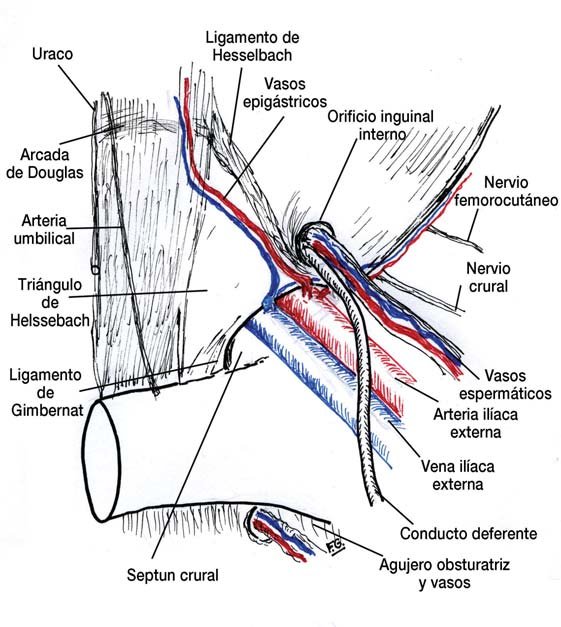
In the case of an indirect inguinal hernia, the sac protrudes through the inguinal canal, while in a direct inguinal hernia it protrudes through the lower wall of the canal, in the lower abdominal region.
Common symptoms include a visible bulge on the affected side of the pubic bone, burning or pain in the bulge, and a feeling of heaviness in the groin. In some cases, people may also experience swelling or pressure in the groin.
In diagnosing an inguinal hernia, healthcare professionals may recommend an ultrasound to determine its presence and severity.
This imaging test can help identify the type of hernia and the extent of the protrusion. In addition to ultrasound, a review of the medical history and a complete physical examination are essential for an accurate diagnosis.
Once diagnosed, inguinal hernias may require active monitoring, especially if they do not present significant symptoms, and surgery may well be necessary to repair them.
The surgical procedure for hernia repair can be performed using open or minimally invasive techniques , and the choice of approach depends on several factors, including the patient's overall health and the size of the hernia.
In the field of gastrointestinal conditions, the presence of an inguinal hernia requires a thorough evaluation and an individualized treatment plan to effectively address symptoms and prevent complications.
It is essential that people know the possible risk factors, as well as the signs and symptoms of inguinal hernias, in order to seek timely medical attention and appropriate management.
The review and guidelines provided by SERAM offer valuable insights for healthcare professionals involved in the family medical care of patients with inguinal hernias, contributing to the overall understanding and optimized treatment of this highly prevalent condition worldwide.
What it is and how it should be treated
Characterized by the protrusion of an organ or preperitoneal intestinal or fatty tissue through the abdominal wall, an inguinal hernia is a major global health problem that can lead to complications if not treated promptly.
The two main types, direct and indirect, differ in the location of the protrusion: the former is a sac that presses through a weak point in the lower abdominal muscles, and the latter, a protrusion through the inguinal canal.
This can cause a visible bulge on either side of the pubic bone, often accompanied by discomfort, especially during physical exertion.
Diagnosing this condition usually involves a thorough physical examination and, in some cases, imaging tests such as ultrasounds, which are essential to determine the size and extent of the hernia.
With the right diagnosis, a personalized treatment plan can be established, ranging from watchful waiting with lifestyle adjustments to surgical intervention, with the main goal of relieving symptoms and reducing the risk of complications.
SERAM's in-depth knowledge and recommendations not only improve the understanding of healthcare professionals in hospitals or clinics of the public or private healthcare system , depending on their geographical location , regarding the treatment of inguinal hernias, but also facilitate the provision of patient-centered and evidence-based care.
A thorough review of the condition, including its characteristics, diagnostic approach, and treatment modalities, plays a vital role in the ongoing improvement of clinical practices and ultimately benefits individuals affected by inguinal hernias.
By highlighting the effectiveness of different treatment options and the importance of a personalized approach for each patient, the guidelines underline the need for a multidisciplinary approach to treat this prevalent and potentially disabling condition.
⚠️ IMPORTANT NOTE:
Please note that this information is for informational purposes only and should not be considered medical advice. It is always important to consult a healthcare professional in your area for a proper diagnosis and timely treatment plan.
The World of Inguinal Hernias
Hernias are a common medical condition that can present in various forms, with inguinal hernias being one of the most frequent types.
The term "inguinal hernia" refers to the protrusion of soft tissue, such as part of the intestine or fat, through a weakened area of the lower abdominal wall, usually in the groin region.
This type of hernia can manifest as a direct or indirect inguinal hernia, each with distinct characteristics in terms of the location of the protrusion and the structures involved.
The diagnosis of an inguinal hernia is established through a combination of medical history, physical examination, and, in some cases, imaging studies such as ultrasound.
The clinical guidelines and insights offered by SERAM provide a comprehensive understanding of the condition, encompassing its presentation, diagnostic approach, and optimal treatment strategies.
By staying up to date with the latest evidence-based recommendations, healthcare professionals can ensure high-quality care and apply best practices in the assessment and treatment of inguinal hernias.
Types of hernias
The clinical guidelines set out by SERAM constitute a valuable resource for healthcare professionals involved in the diagnosis and management of inguinal hernias.
These guidelines offer an in-depth view of the characteristics, diagnostic techniques, and treatment modalities of direct and indirect inguinal hernias , thereby enriching the knowledge base and clinical practice of physicians.
Focused on evidence-based practices, the guidelines serve as a compass for providing optimal care, emphasizing the importance of a thorough diagnostic approach and individualized treatment strategies to effectively address the diverse manifestations of inguinal hernias.
By incorporating the recommendations established by SERAM, healthcare professionals can navigate the nuances of inguinal hernias with precision and apply personalized interventions that prioritize the long-term well-being and health of patients with this condition.
Ways in which an inguinal hernia can be treated
When inguinal hernia treatment is initiated, the guidelines established by SERAM emphasize the importance of a personalized, patient-centered approach that takes into account the nature of the hernia, the individual's general health, and the presence of any underlying disease.
This comprehensive framework for the treatment of inguinal hernias covers the entire spectrum of care, from initial assessment and diagnosis to the selection of the most appropriate treatment modality, whether watchful waiting or surgical intervention.
By providing a comprehensive understanding of the advantages and considerations associated with each treatment option, the guidelines enable healthcare professionals to engage in shared decision-making with patients, ensuring that the chosen treatment strategy aligns with the patient's preferences and health goals.
Furthermore, the emphasis on post-treatment care and long-term follow-up helps optimize the overall quality of care and outcomes for people with inguinal hernias, reflecting a commitment to holistic and integrated care practices.
Common treatments for inguinal hernias
The range of treatment options for inguinal hernias, as outlined in the SERAM guidelines, encompasses both conservative and surgical approaches, and the selection of the most appropriate intervention depends on the specific characteristics of the hernia and the individual's overall health status.
From a surgical point of view, the guidelines outline the nuances of different surgical techniques, such as open, laparoscopic or minimally invasive procedures for inguinal hernia , and shed light on their benefits and comparative considerations.
By providing healthcare providers with a comprehensive understanding of these surgical modalities, the guidelines facilitate informed discussions and decisions about the most appropriate approach for each patient, thereby fostering a personalized and precision-oriented treatment paradigm.
Furthermore, the integration of postoperative care recommendations further enriches the guidelines, serving as a roadmap for the comprehensive treatment of inguinal hernias and reinforcing the commitment to optimize outcomes and quality of life for patients with inguinal hernias.
Diagnosis of inguinal hernias
Diagnosing an inguinal hernia involves a meticulous process based on clinical evaluation, the patient's medical history, and, in some cases, the judicious application of diagnostic imaging techniques.
The guidelines articulated by SERAM establish a solid basis for the diagnostic approach to inguinal hernias, outlining the key steps involved in the accurate and comprehensive evaluation of this prevalent condition.
By emphasizing clinical indicators and the role of diagnostic tools, such as ultrasound, in confirming the presence and determining the characteristics of an inguinal hernia , the guidelines empower healthcare professionals to navigate the diagnostic landscape with confidence and accuracy.
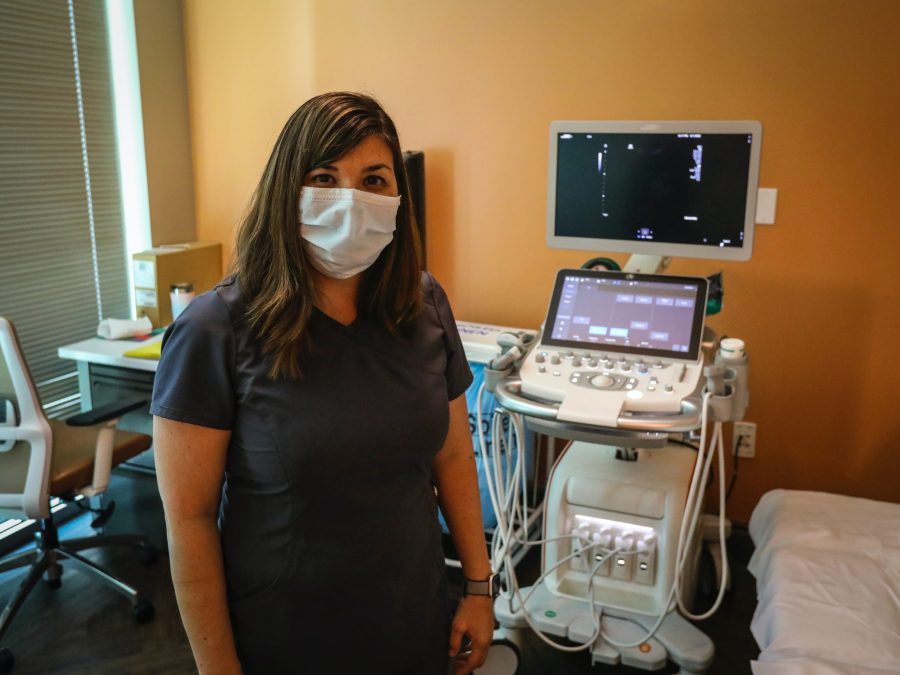
Furthermore, incorporating best practices and evidence-based recommendations into the diagnostic process allows for standardization and optimization of inguinal hernia assessment, resulting in timely and accurate diagnoses that are the cornerstone of effective therapeutic interventions and improved clinical outcomes.
Surgical Comparative Matrix
| Comparison Criterion | Indirect Inguinal Hernia | Direct Inguinal Hernia |
| Relationship with Epigastric Vessels | Side to the epigastric vessels | medial to the epigastric vessels |
| Anatomical Defect | Patent deep inguinal ring (Fascia Transversalis) | Hesselbach's Triangle |
| Predominant Etiology | Congenital (Persistence of the processus vaginalis) | Acquired (Tissue weakness, aging, exertion) |
| Scrotal Descent | Common (Inguinoscrotal Hernia) | Rare (It is usually a rounded anterior protrusion) |
| Risk of Imprisonment | Higher (Narrow neckline) | Lower (Wide and non-extendable base) |
| Nyhus Classification | Type I (Normal ring) and Type II (Dilated ring) | Type III-A (Inguinal floor defect) |
Modern open surgery (Lichtenstein technique) and laparoscopic surgery (TAPP/TEP).
Inguinal hernia repair has evolved towards the tension-free principle by placing synthetic prostheses (meshes), reducing the historical recurrence rate from 10% to 15% to less than 1%.
Currently, the surgical management of the inguinocrural region is divided into two major approaches standardized by international guidelines ( HerniaSurge ): the open Lichtenstein hernioplasty and the laparoscopic hernioplasty in the preperitoneal space (TAPP and TEP).
1. Modern Open Surgery: Lichtenstein Technique
The Lichtenstein hernioplasty remains the gold standard in open surgery due to its high reproducibility, low cost, and the possibility of performing it under local or regional anesthesia.
Phases of the Technique:
-
Anterior Approach: 4 to 6 cm inguinotomy incision parallel to the inguinal ligament. Incision of the external oblique aponeurosis opening the superficial inguinal ring.
-
Nerve Preservation: systematic identification of the ilioinguinal nerve , the iliohypogastric nerve , and the genital branch of the genitofemoral nerve to keep them out of the mesh fixation zone and prevent chronic inguinodynia.
-
Management of the Hernial Sac:
-
Indirect: dissection of the spermatic cord sac, invagination, or proximal ligation.
-
Direct: involution of the weakness of the floor or the lower face (of the inguinal canal) by means of continuous non-absorbable suture.
-
-
Mesh Placement (Previous Plan): a polypropylene mesh is used (typically 7.5 × 15 cm).
-
Medial Fixation: It overlaps at least 2 cm over the pubic tubercle and is fixed to the Cooper's ligament or the pubis with non-absorbable monofilament.
-
Lower Fixation: continuous suture over the inguinal ligament to the lateral internal inguinal ring.
-
Superior Fixation: interrupted points in the tendon of the internal oblique.
-
Valve Construction: The two lateral tabs of the mesh crossed behind the spermatic cord, forming a new deep inguinal ring.
-
2. Laparoscopic Hernioplasty (TAPP and TEP)
The laparoscopic approach does not address the hernia from "outside" (inguinal canal), but from "inside" (preperitoneal space), covering the entire Fruchaud's Myopectineal Orifice (OMP) in one step using a large three-dimensional mesh (10 × 15 cm).
A. TAPP (Transabdominal Preperitoneal) Technique
-
Mechanism: The camera is inserted into the pneumoperitoneum. The parietal peritoneum is incised 3 cm above the deep inguinal ring (from the anterior superior iliac spine to the medial umbilical ligament).
-
Dissection: a wide descending peritoneal flap is created, dissecting the preperitoneal space (of Bogros and Retzius) until the pubis, epigastric vessels, cystic cord and crural orifice are identified.
-
Mesh: A mesh is extended without rigid fixation or with atraumatic fixation (tackers/fibrin adhesive).
-
Peritoneal Closure: Hermetic closure of the peritoneal flap is mandatory using continuous barbed suture to avoid direct contact of the intestine with the synthetic mesh and to prevent intestinal obstruction by adhesions or enterocutaneous fistulas.
B. PET Technique (Totally Extraperitoneal)
-
Mechanism: The peritoneal cavity is never entered. Using a balloon trocar placed under the posterior rectus sheath below the umbilicus, the working space is created directly in the preperitoneal plane.
-
Dissection: direct blunt-pneumatic dissection of the Retzius and Bogros spaces.
-
Main advantage: zero risk of intra-abdominal visceral injury, adhesions, or peritonitis in case of peritoneum rupture. However, it has a considerably steeper learning curve and less room for maneuver.
3. Surgical Comparative Matrix
| Criterion | Open (Lichtenstein) | Laparoscopic TAPP | Laparoscopic TEP |
| Mesh Plan | Anterior (Inguinal Floor) | Preperitoneal (Posterior) | Preperitoneal (Posterior) |
| OMP Coverage | Partial (Inguinal Space) | Full Equipe (Inguinal + Crural) | Full Equipe (Inguinal + Crural) |
| Type of Anesthesia | Local, Fill or General | Mandatory general | Mandatory general |
| Indication Choice | Primary unilateral, giant inguinoscrotal hernia | Hernia bilateral, relapsed post-Lichtenstein, suspected femoral hernia | Hernia bilateral, relapsed, patients with previous intra-abdominal surgeries |
| Postoperative pain | Moderate (aponeurotic fixation) | Minimum | Minimum |
| Return to Work | 14 - 21 days | 5 - 7 days | 5 - 7 days |
4. Critical Anatomical Safety Zones in Laparoscopy
During mesh fixation in TAPP and TEP, the surgeon must memorize the two danger zones to avoid fatal complications or neuropathies:
-
Triangle of Doom:
-
Boundaries: vas deferens/round ligament (medial) and spermatic/testicular vessels (lateral).
-
Contents: external iliac artery and vein . Staples, tacks, or sutures are prohibited in this area (risk of catastrophic hemorrhage).
-
-
Triangle of Pain:
-
Boundaries: spermatic vessels (medial) and iliopubic tract (superior).
-
Contents: femoral branch of the genitofemoral nerve, lateral femoral cutaneous nerve, and femoral nerve . Staples should not be fixed below the iliopubic tract (the main cause of intractable neuropathic inguinodynia).
-
Value analysis
The Surgical Criteria of the Nyhus/Gilbert/EHS Classification:
Dr. Delgado brings a high-quality, distinctive value to teaching by explaining the typification in the operating room.
Teach that the Nyhus Classification divides hernias into:
Type I (indirect with normal inner ring).
Type II (indirect with dilated ring but intact floor).
Type III-A (direct due to floor default).
Type III-B (trousers or mixed).
Type IV (recurrent) gives the surgeon the exact guideline to decide whether to require invagination of the sac or complete reinforcement of the inguinal floor.
Academic and Professorial Vision (Department of Surgery – University of Cuenca):
The differential diagnosis focuses on the management of pantaloon hernias (mixed, direct/indirect) . As university professors, we teach residents that, in 10% of cases, the patient presents with a simultaneous direct and indirect component affecting the epigastric vessels.
Reducing both sacs and unifying them below the Henle ligament before fixing the mesh prevents the persistence of postoperative symptoms.
Conclusion
In the area of putting an end to the essential, understanding the differences between direct and indirect inguinal hernias can help identify and treat this common condition.
Being aware of the symptoms and seeking a proper diagnosis, for example through an ultrasound, can lead to effective treatment options, such as surgery or active surveillance.
It is important to consult a local medical professional or a doctor in the city, depending on your geographical location , if you experience any worrying symptoms to ensure proper treatment of the hernia.
Now's the time to share the most interesting parts of this article on your social media to benefit more people around the world. Thank you for your comment for the audience of this informative blog about digestive health.
See you in the next news update!
Dr. Jorge Delgado, Surgeon. Direct and Indirect Inguinal Hernia.
📌 Recommended readings:
👉 Guide on open techniques, polypropylene mesh and back wall.
👉 Analysis of massive descent, the scrotal sac , and the technique of abandoning the sac.
👉 Lesson on abdominal wall reconstruction and the sublay plane.