

Welcome, dear internet friend. You are now in a highly specialized space designed "by people for people ." The term sclerotic gallbladder describes an organ that has reached its limit after years of battling inflammation.
It is not just a gallbladder with stones (calculi or liths); it is an organ that has modified its structure, becoming small and rigid.
Before we delve deeper, I invite you to do a neck and shoulder stretch; releasing physical tension helps you better process information that is important for your personal development.
Join us to understand why this diagnosis requires the hand of an expert surgeon and what are the safe steps for your full recovery.
It is classified as cholelithiasis or gallstone disease. The characteristic feature of sclerotic gallbladder (SGB) is the absence or scarcity of gallbladder wall contraction during bile expulsion.
The most common cause of gallbladder disease (GBD) is the presence of gallstones. This type of cholelithiasis is a recurring problem affecting up to 12% of the world's population , representing a high incidence rate.
It is appropriate to begin answering the questions that patients or their families ask us doctors, both in the consultation room and in hospital emergency rooms:
Frequently Asked Questions – Sclerotic Gallbladder
What does it mean if my gallbladder is sclerotic?
This means that after many episodes of inflammation, the gallbladder has atrophied, lost its internal cavity, and become a hard scar that no longer stores bile.
Why is this type of gallbladder more dangerous?
Because it is usually very attached to vital organs such as the liver, duodenum or biliary tract, which makes surgery much more laborious and technical.
Can laparoscopic surgery be performed on a sclerotic or atrophic condition?
Yes, in expert hands like Dr. Delgado's, it's possible. However, the patient should know that safety comes first, and the surgeon must have the experience to navigate a complex anatomy.
What are the symptoms of this condition?
Often, the patient no longer has the classic acute biliary colic, but a dull, chronic pain, constant indigestion, and a feeling of heaviness that does not go away.
Gallstones form as a result of a number of metabolic factors, such as elevated levels of cholesterol, bile acids, pigment dispersion, and increased cellular waste, which precipitate and form gallstones due to fixed contraction and lack of bile drainage into the small intestine.
The presence of gallstones causes chronic inflammation of the gallbladder wall and biliary obstruction, triggering a cascade of chronic immunological events that culminate in atrophy of the gallbladder wall.
The definitive solution and recommendation for this problem is laparoscopic cholecystectomy (resection of the gallbladder through minimally invasive surgery).
This minimally invasive procedure helps to remove the gallbladder and gallstones, and therefore reduces inflammation of the surrounding tissues.
It is appropriate to stand up and take a deep breath, holding it for 4 seconds, and then continue with a slow exhalation.
The exercise is repeated 3 to 4 times. In this way, we provide our neurons with the best source of vital energy , which responds with high cognitive concentration and the retention of information for preventative health.
It determines a proactive attitude and not being a victim of bad decisions of self-medication or self-medication in the face of the discomforts of VBE and what it does is delay the visit to the doctor providing services in the hospitals or health clinics of the public or private system, according to the personal global geographical location.
Let's read more of this interesting book!
Sclerotic Gallbladder
Sclerotic gallbladder (SGB) is a rare but potentially serious condition affecting the gallbladder. It occurs when the gallbladder wall thickens and hardens (fibrosis) due to chronic inflammation, leading to sustained contraction of the organ.
It has been observed that sclerotic gallbladder has appeared more frequently in the last decade and can affect patients with chronic gallbladder disease in certain populations, raising concerns about its epidemiology.
The exact cause of sclerotic gallbladder remains unknown, but it is thought to be associated with prolonged biliary tract disease, such as primary sclerosing cholangitis, autoimmune disorders, such as primary sclerosing cholangitis, and cystic fibrosis.
Symptoms usually include abdominal pain, nausea and vomiting, jaundice, clay-colored stools, dark urine, and itchy skin.
In severe cases, complications such as cholecystitis (inflammation of the gallbladder) or septic biliary pancreatitis may appear, followed by cholangitis ( infection of the intrahepatic and extrahepatic bile ducts).
It is important that people experiencing these symptoms contact their doctor for a more thorough evaluation.
Causes of a sclerotic gallbladder
Sclerotic gallbladder is a rare condition characterized by a hardened and shrunken gallbladder.
It usually occurs in people over 70 years of age and can be due to various underlying medical disorders, such as primary biliary cirrhosis, chronic cholecystitis, and other lithogenic diseases (which involve the formation of gallstones or gallstones).
Although not much is known about this particular gallbladder condition, it appears to be related to chronic inflammation, which causes scarring of the surrounding tissues and atrophy of the organ.
What particularly worries patients with sclerotic gallbladder are the complications arising from gallstones in the gallbladder or bile ducts, which can cause jaundice, the terrible pancreatitis, or the dreaded cholangitis (infection of the intra- and extrahepatic bile ducts).
Ultimately, the diagnosis may include imaging tests, such as ultrasound or computed tomography (CT) scans, which can help detect signs of inflammation and calcification of the organ.
Treatment options may include medications to control symptoms or even surgical removal of the gallbladder if deemed necessary.
Symptoms of sclerotic gallbladder (SGB)
VBE can cause various symptoms , such as:
- Pain: in the upper right part of the abdomen, which is usually exacerbated by fatty meals or physical exertion.
- Nausea with vomiting: which may be accompanied by fever.
- JaundiceYellowing of the skin and eyes, due to obstruction of the gallbladder or biliary tract.
- Weightloss: due to poor absorption of fats and other nutrients.
- Pruritus: skin itching due to the accumulation of bile acids in the system.

If left untreated, sclerotic gallbladder can cause a number of serious complications, including gallbladder cancer and liver cirrhosis.
It is important to consult a doctor at a public or private health center or hospital in your city or town if you experience these symptoms, in order to receive the appropriate diagnosis and treatment .
Diagnosis of sclerotic gallbladder
The diagnosis of sclerotic gallbladder disease is based on clinical evaluation and imaging studies . The doctor will perform a physical examination and ask about any previous digestive symptoms.
In addition, imaging studies, such as ultrasound or computed tomography (CT), can provide useful information about the size and condition of the gallbladder.
In some cases, a laparoscopic cholecystectomy may be recommended to confirm the diagnosis and remove the stones and any inflamed tissue.
During this procedure, a small camera is inserted into the abdominal cavity through a minimal incision, allowing the surgeon to visualize the inside of the cavity and identify the inflammatory process of the biliary viscus and adjacent tissues; most often, the cause is a gallstone.
Differential diagnosis
Scleroatrophic gallbladder is a rare condition characterized by gallbladder atrophy with associated cholecystitis, inflammation, and sometimes fibrosis.
It can be difficult to differentiate it from other conditions , such as chronic cholecystitis and primary sclerosing cholangitis , as well as from tumors of the biliary tract, due to the overlap of symptoms.
Differentiating between these types of diagnosis requires imaging studies and other tests, such as computed tomography, which can reveal thickening of the gallbladder walls and atrophy of the biliary viscera.
Therefore, to obtain an accurate differential diagnosis, a multidisciplinary approach is necessary that includes imaging studies and consultations with specialists in surgical pathology, hepatobiliary surgery, gastroenterology, and radiology.

Blood tests can also help establish a definitive diagnosis by ruling out other diseases. With a correct diagnosis and treatment, patients can minimize the risk of developing complications.
The challenge of "lost architecture"
Sclerotic gallbladder is an anomaly that presents a unique challenge for us as surgeons. Unlike the typical gallbladder configuration, this condition results in the disappearance of the organ's normal anatomy.
The gallbladder is attached primarily to the main bile duct, which increases the risk of injury during surgery compared to more standard surgery.
This represents for us surgeons a situation known as "lost architecture", in which we are forced to perform complicated and risky procedures without the advantage of having recognizable structures to rely on.
Through a combination of advanced imaging techniques and specialized instruments, the challenge of the sclerotic gallbladder can be addressed with confidence.
Specialist Differentiator:
The application of a Safety Culture in cholecystectomy is a great example of how physicians can bridge the gap between surgical expertise and patient safety.
Dr. Delgado's mention of using a Culture of Safety to determine when to convert a surgery or perform a subtotal cholecystectomy demonstrates his medical honesty and experience that inspires confidence between doctor and patient.
This type of specialist differentiator could be a great asset in addressing the challenge of "Lost Architecture" in surgery.
By applying the principles of a Culture of Safety, surgeons can more accurately assess their approach and take steps to protect the patient, while keeping pace with the advancement of their procedures.
By doing so, it opens the door to safer surgical techniques, which can be more easily adopted by professionals in different health areas.
📌IMPORTANT NOTE: This content is for informational purposes only. For medical advice or diagnosis, consult a healthcare professional at your local hospital or clinic.
Treatment of gallbladder scleroatrophy
Treatment for gallbladder disease ( GBD) usually requires hospitalization to reduce inflammation of the gallbladder . In some cases, urgent surgery may be necessary to remove the sclerotic gallbladder laparoscopically.
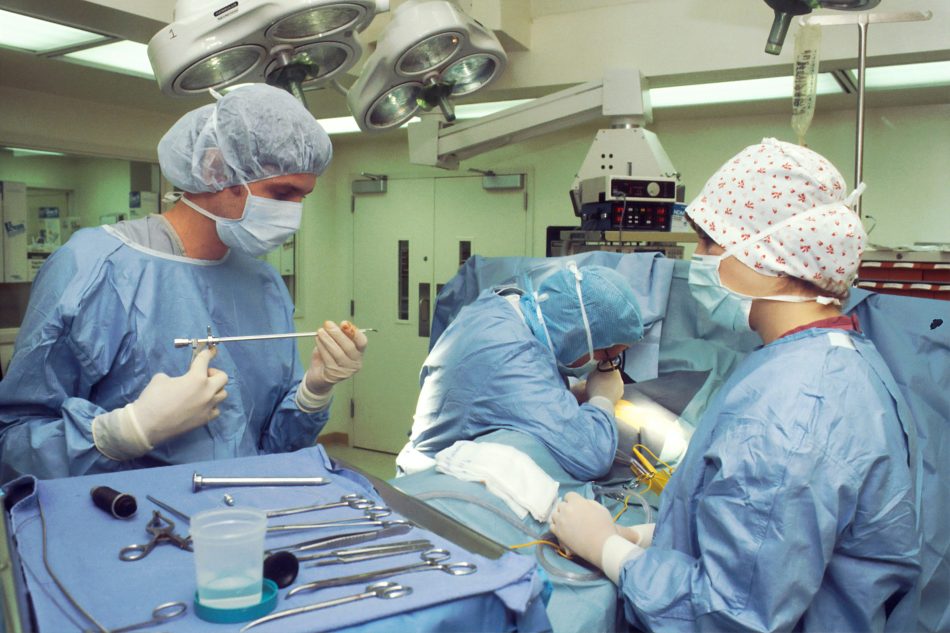
Another option is to treat a sclerotic gallbladder with medications, such as antibiotics or anti-inflammatories. These medications help reduce inflammation and control infection, relieve pain in the gallbladder , and restore bile production, which improves fat digestion.
In some cases, lifestyle modifications may be recommended to reduce the risk of gallstone formation and BV.
These include following a healthy diet, maintaining a healthy weight, and exercising regularly. In turn, avoiding smoking and reducing alcohol consumption also help lower the risk of BVD.
A sclerotic gallbladder should not be ignored; it is a condition that has progressed silently and requires immediate professional attention. Surgery is the only way to avoid major complications.
Prevention
Sclerotic gallbladder is a rare but serious gastrointestinal disorder that can lead to progressive inflammation of the gallbladder.
Although the exact cause of the disease is unknown, some experts believe that chronic infection or autoimmune disorders may be contributing factors. Symptoms may include abdominal pain, nausea, vomiting, and weight loss.
Treatment for sclerotic gallbladder disease typically focuses on symptom management and may include medication or dietary changes. In severe cases, surgery to remove the gallbladder may be necessary.
Preventing gallbladder disease is largely a matter of lifestyle, and maintaining a healthy, high-fiber diet and exercising regularly are key components in reducing the risk. In addition, avoiding obesity and a sedentary lifestyle helps reduce the risk of developing this disease.
Strengthening muscles through regular exercise, such as swimming, running, cycling, or following a fitness program , can not only help maintain a healthy weight but also improve digestion; ultimately, it reduces the risk of developing sclerotic gallbladder disease.
Conclusion
Finally, the essential point: scleroatrophic gallbladder is a chronic inflammatory process of the gallbladder , caused by the presence of calcifications and inflammation of its wall.
The definitive solution to this problem is a minimally invasive procedure known as laparoscopic cholecystectomy , which allows the removal of gallstones and gallbladder tissue.
If left untreated, BV can cause serious complications. Treatment typically includes hospitalization, medication, and lifestyle changes.
It is important to consult a doctor in your city or town if you experience any of these symptoms in order to receive timely and appropriate diagnosis and treatment.
Now is the opportunity to share preventive medical-surgical health information on social networks and, together, ensure that more people and their families benefit and are not just another statistic among complications.
Thank you for leaving your comments and suggestions about blog topics. Until next time!
Dr. Jorge Delgado, Surgeon. Sclerotic Gallbladder.
📌Read more: